

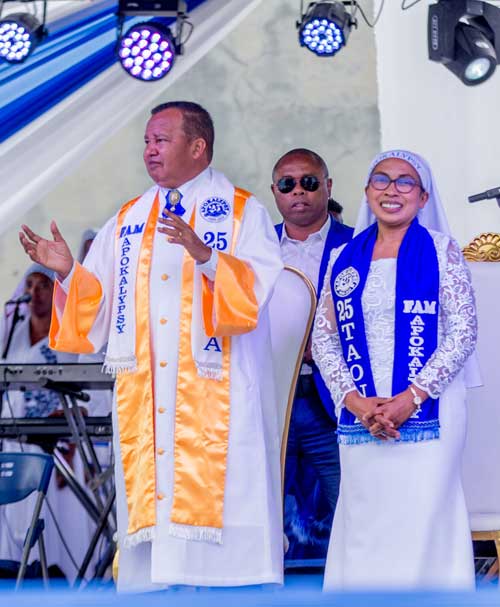
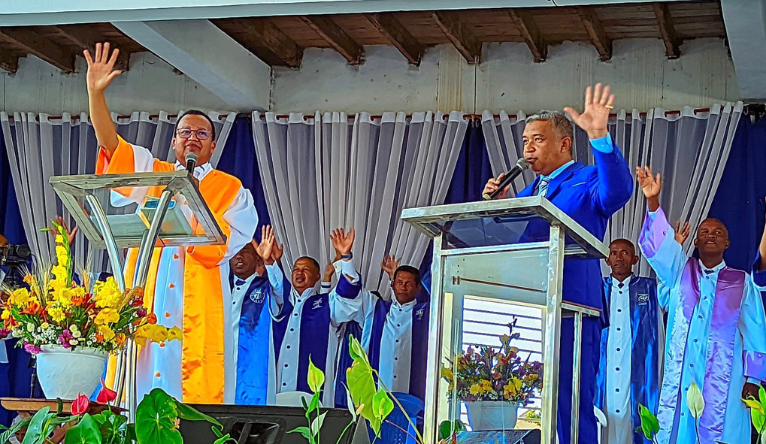
The Last Visit of Pastor Mailhol to the Apokalypsy Church of Antsahatsiresy in 2024 - December 7
-
Categories: Populaire
-
Mise à jour le: 22-Dec-2024

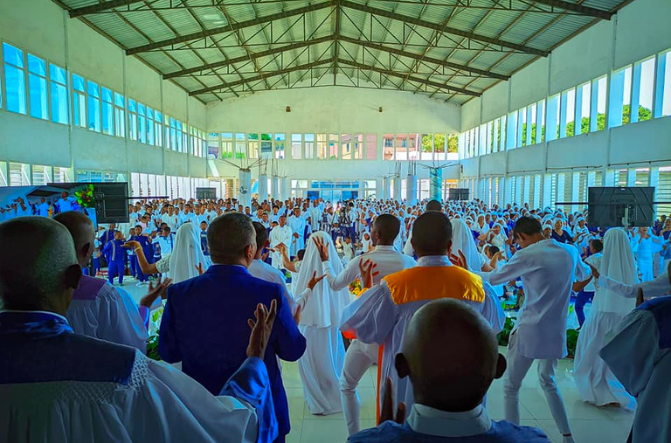
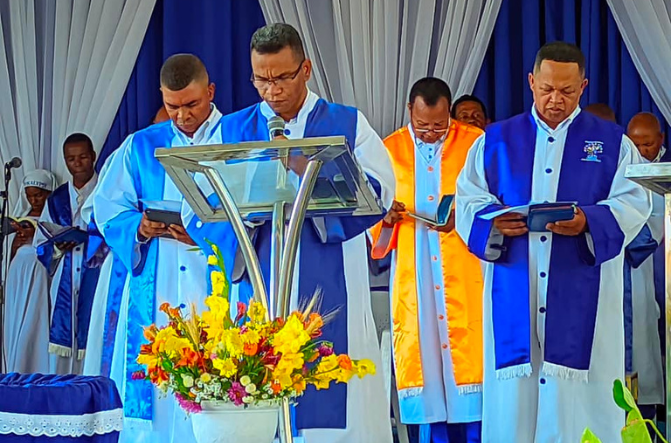
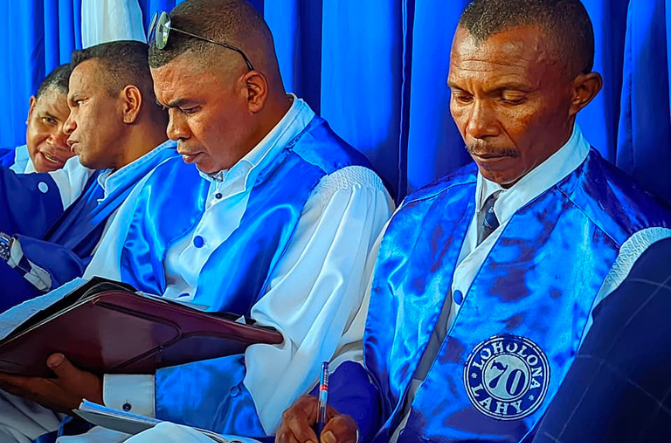
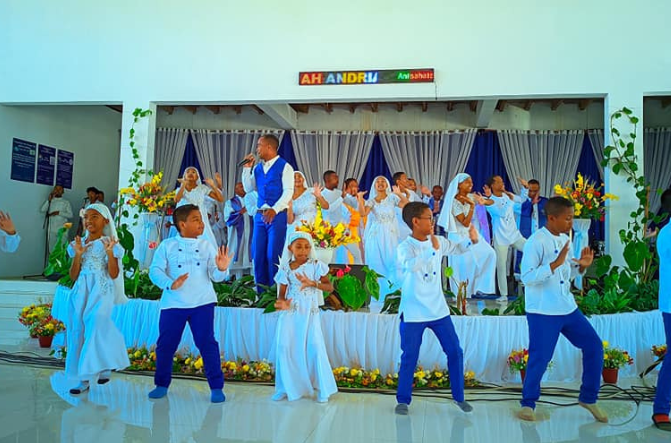
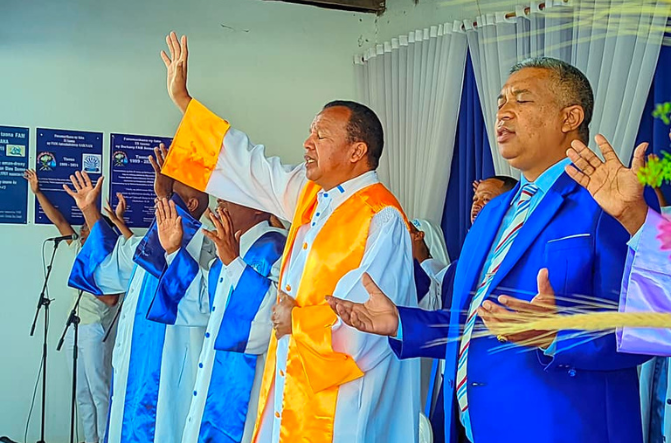
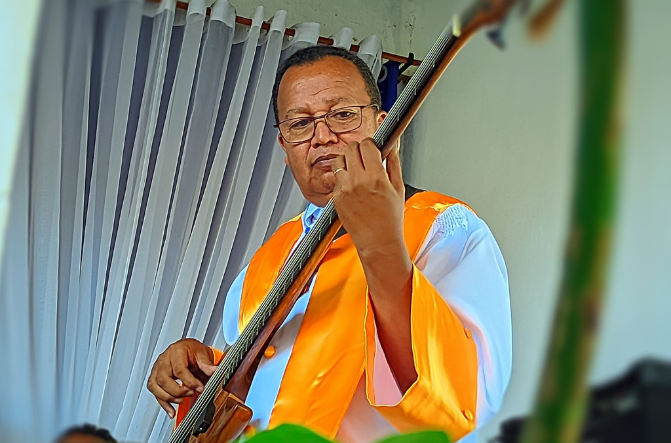
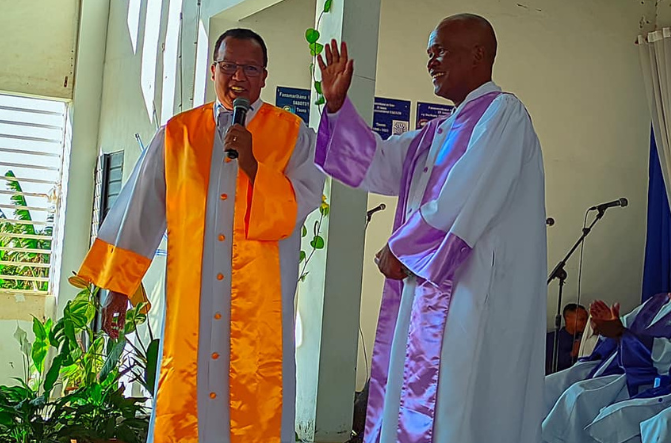
After the regional meeting in Ambohimarina Itaosy, Pastor Mailhol and his family visited the Apokalypsy Church at Antsahatsiresy Sabotsy Namehana last December 7th,2024. This will be Pastor Mailhol's last visit to this church for the year. It was a very joyful Sabbath for the entire congregation, not only for the locals but also for the guests. In fact, many guests attended the Sabbath at this location.
Pastor Mailhol and his family were accompanied by several people, including Lalaina, the usual English interpreter, Pastor Gaeton with his wife, and an elder from the Democratic Republic of Congo (DRC). Pastor Mailhol mentioned that the Apokalypsy Church got the radio station materials from China through this elder, who studied there. He helped and guided Pastor Mailhol in purchasing the necessary materials for the Apokalypsy radio station, which is now available in various places in Madagascar, not just in Antananarivo. Pastor Mailhol explained that this elder had asked for a blessing from him to study in China, and Pastor Mailhol prayed for him. After that, the elder traveled to China to study Physics, which is how he met Pastor Mailhol and guided him there. Currently, this elder is a Professor of Physics in the DRC.
What made this Sabbath at Antsahatsiresy Church special were the two great pieces of news brought by Pastor Mailhol. The first was a gift of 100 Euros for the church from Mrs. Isabelle, a believer from France. Pastor Mailhol met her in France in 2005, and she became a member after being convinced by his explanation of the Book of Revelation. She offered this amount to the church for its construction. Currently, the large Apokalypsy Church in Antsahatsiresy is still under construction. The second piece of news was about the "Startimes" satellite channel. The International Apokalypsy Church now has its own channel through Startimes, allowing the church to broadcast special TV shows and programs.
The entire congregation experienced happiness and joy during this Sabbath. According to the liturgy of the International Apokalypsy Church, the morning consisted of adoration, a prayer chain, various offerings, the reading of God's Word according to the pericope of the Apokalypsy Church, and a sermon by Pastor Mailhol. The lectures were from the book of Ecclesiastes chapter 10, Matthew chapter 22 verses 15 to 22, and Hebrews chapter 2 verses 10 to 18.
During his sermon, Pastor Mailhol discussed two main themes: "Wisdom and Foolishness" and "Tithes and Taxes." Pastor Mailhol began his sermon with Ecclesiastes 10:2: "The heart of the wise inclines to the right, but the heart of the fool to the left." He explained that, according to the Bible, all human hearts are on the left, making us all fools unless our hearts are on the right, which is impossible for humans. He referenced Proverbs 26:4-5: "Do not answer a fool according to his folly, or you yourself will be just like him. Answer a fool according to his folly, or he will be wise in his own eyes." Then, he described two types of fools: those who are mentally unaware of their actions and those who are mentally healthy but arrogant. He advised not to engage with the former, as they will not understand or heed advice, but to be cautious of the latter, who underestimate others.
He continued with Matthew 22:15-22, discussing the Pharisees' attempt to trap Jesus regarding paying taxes to Caesar. Pastor Mailhol explained the different types of taxes and emphasized that while people readily pay taxes to Caesar, they often neglect God's tithes, which he identified as a primary cause of poverty. He testified that he has faithfully paid tithes since 1975 and has never faced financial problems since. He encouraged the congregation to pay God's tithes to escape poverty, noting that if they can pay Caesar's taxes, they should also pay God's, as God is greater than Caesar. He highlighted the 30-year history of the Apokalypsy Church and questioned why some members still face financial difficulties despite being part of the church for over 25 years. He concluded by urging the congregation to be wise and pay tithes, though he emphasized that it is a personal choice. After the sermon, and as usual, the congregation offered tithes and other offerings accompanied by the church choir singing beautiful songs.
In the afternoon, Pastor Mailhol's explanation of the Book of Revelation was presented, and all members gathered inside the church to listen and learn. When the explanation was over, Pastor Mailhol took the floor and explained the reason for his absence over the past seven Sabbaths. Not only that, he also addressed the current political situation in Madagascar. Then, the wonderful Sabbath concluded with adoration, where the congregation sang and danced with joy, feeling the glory of God throughout the church.
All Sabbaths are special, and this one was one of the most amazing Sabbaths ever in the history of the Apokalypsy Church. Furthermore, the visit of Pastor Mailhol always brings something great into the life of every believer, as it brings hope, joy, and goodness. "The Lord your God has chosen you out of all the peoples on the face of the earth to be his people, his treasured possession." Deuteronomy 7:6.

Pastor Jean Pierre's Sermon at Ambohidratrimo Church: A Message of Encouragement and Faith
-
Categories: Populaire
-
Mise à jour le: 15-Dec-2024
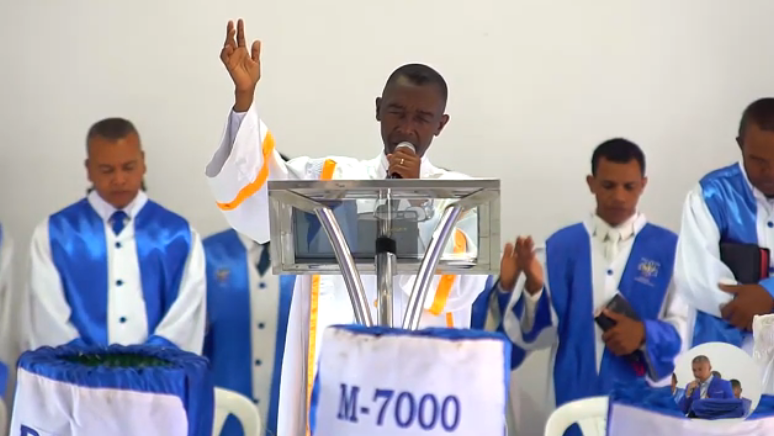


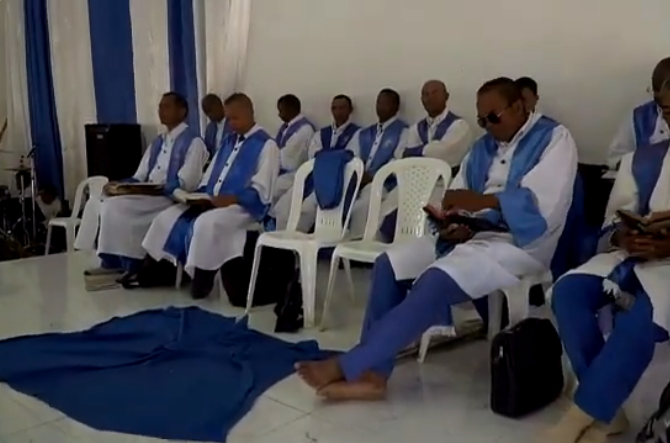
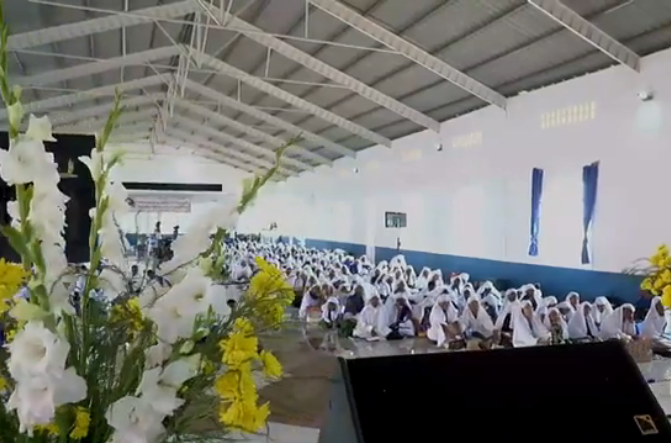



On November 23, 2024, Pastor Jean Pierre delivered a moving sermon at the FAM church in Antohibe, Ambohidratrimo. Drawing on several scriptural passages—1 Kings 8:1-21, Mark 1:40-45, and Acts 13:13-41—he shared a profound message of hope and spiritual renewal under the theme "FAM, the Temple of God."
The sermon explored the rich biblical history of God's temple and its symbolic significance in the lives of believers. Pastor Jean Pierre encouraged the congregation to reflect on their role as living temples, highlighting the transformative power of faith through Jesus Christ.
The History of God’s Temple
The journey of the temple begins in the desert, where God commanded Moses to build a sanctuary. As stated in Exodus 25:8-9, "Have them make a sanctuary for me, and I will dwell among them." This portable structure, called the tabernacle, symbolized God's presence among His people.
Under Solomon's reign, the tabernacle transitioned into a permanent temple in Jerusalem, a magnificent structure built in 968 BC. However, this temple faced destruction at the hands of King Nebuchadnezzar in 587 BC. Despite this devastation, the prophet Haggai led efforts to rebuild the temple around 520 BC.
Over time, under Herod the Great, the temple regained its former grandeur. Yet, as Jesus himself prophesied, the temple would once again face destruction, leaving no stone unturned (see John 2:13-22). Jesus used the temple's physical destruction as a metaphor, declaring, "Destroy this temple, and I will raise it again in three days." While misunderstood by many, Jesus was referring to his own body as the ultimate temple, destined to be resurrected after his crucifixion.
The True Temple: Jesus Christ
Pastor Jean Pierre emphasized that while the physical temple held historical and spiritual significance, the true temple of God is embodied in Jesus Christ. As Christians, we are called to recognize that we, too, are temples of the Holy Spirit. Our lives should reflect this sacred identity, filled with God's presence and dedicated to His purposes.
A Lesson from the Gospel of Mark: Healing the Leper
The sermon turned to Mark 1:40-45, where Jesus healed a leper—a powerful narrative that illustrates his compassion and willingness to restore those marginalized by society.
The leper, considered unclean and ostracized, approached Jesus with unwavering faith, saying, "If you are willing, you can make me clean." Moved by compassion, Jesus replied, "I am willing. Be clean," and the man was instantly healed.
This encounter reveals profound spiritual truths:
• Jesus' Inclusivity: Jesus welcomed the outcast, showing that no one is beyond God's love and grace.
• Faith’s Power: The leper’s belief in Jesus' ability to heal exemplifies the faith required to receive divine intervention.
• Purification of the Temple: The leper’s cleansing symbolizes the sanctification of God’s temple. Just as Jesus cleansed the physical temple in Jerusalem, he purifies our hearts and lives, transforming us into living sanctuaries.
The Importance of Obedience and Witness
After his healing, Jesus instructed the leper to show himself to the priest, in accordance with Mosaic law (Leviticus 14). This act of obedience underscores the importance of respecting God’s commands, even as we embrace the new covenant established through Christ.
Pastor Jean Pierre highlighted that spiritual renewal requires both personal transformation and a commitment to living according to biblical principles. Healing and restoration are not endpoints but the beginning of a journey toward deeper faith and greater service.
Paul's Missionary Journey: Perseverance in Faith
The sermon also drew insights from Acts 13:13-41, where the Apostle Paul continues his mission despite challenges. After John Mark’s departure, Paul pressed on, delivering a powerful message of salvation through Jesus Christ. He reminded his audience of God's faithfulness throughout history, from Israel's deliverance from Egypt to the fulfillment of messianic prophecies in Jesus.
Paul’s perseverance serves as an example for Christians today. As Pastor Jean Pierre explained, faith often involves trials, but we must remain steadfast, proclaiming the gospel and living as witnesses to Christ's transformative power.
Application for the Modern Church
Pastor Jean Pierre urged the congregation at Ambohidratrimo to embrace their identity as temples of God. This involves:
• Spiritual Purification: Like the leper, we must seek cleansing from sin and align our lives with God’s will.
• Active Faith: Our faith should be visible through our actions, demonstrating God’s love and grace to others.
• Commitment to Mission: As living temples, we are called to share the gospel and serve as beacons of hope in our communities.
The pastor reminded the church that just as the physical temple faced destruction and renewal, our spiritual lives may go through seasons of struggle and restoration. Yet, through Christ, we can emerge stronger, renewed, and more aligned with God’s purposes.
Conclusion
Pastor Jean Pierre's sermon at FAM Antohibe, Ambohidratrimo, was a powerful call to recognize and embody our identity as God’s living temples. By reflecting on the history of the temple, the healing of the leper, and Paul’s perseverance, the message highlighted the importance of faith, obedience, and mission.
As the congregation reflected on these truths, they were encouraged to pursue spiritual renewal, trusting in Jesus as the cornerstone of their lives. Whether facing personal struggles or broader challenges, the assurance of God’s presence provides strength and hope.
The sermon not only deepened the congregation’s understanding of biblical teachings but also inspired them to live out their faith boldly, knowing that through Christ, they are cleansed, restored, and empowered to serve as temples of the living God.
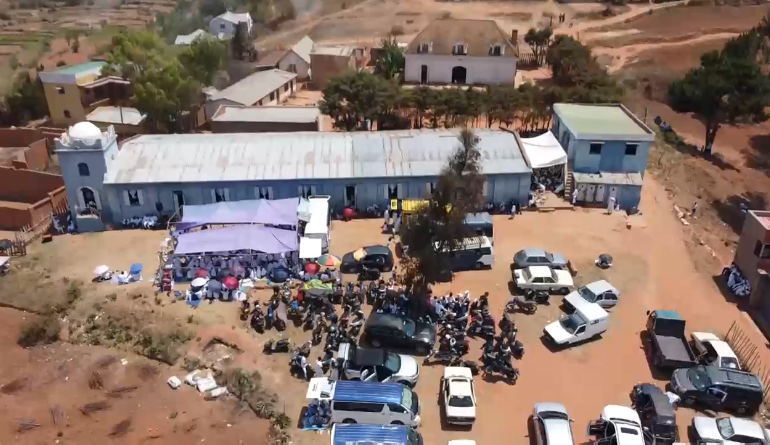
Pastor Jean Pierre's Sermon at FAM Ambohimanambola Church, November 9th, 2024
-
Categories: Populaire
-
Mise à jour le: 01-Dec-2024

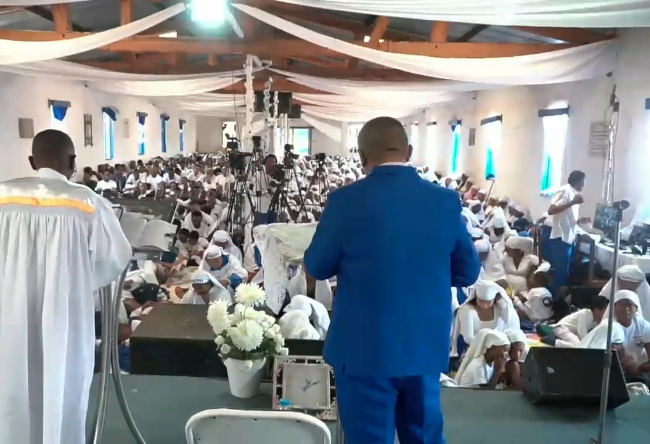


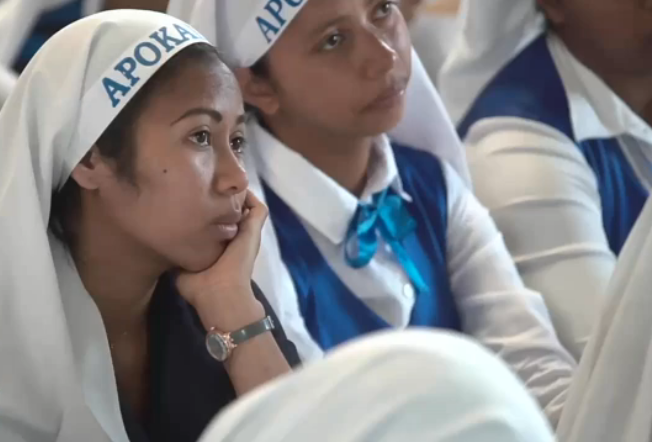



Pastor Jean Pierre delivered an enriching and thought-provoking sermon at FAM Ambohimanambola on Saturday, November 9, 2024. His message, titled “Casting Lots in the Holy Scriptures,” explored a fascinating biblical practice often overlooked but deeply significant. The sermon was anchored on Proverbs 18:18: “Casting lots causes contentions to cease and keeps the mighty apart.” Pastor Jean Pierre expounded on this practice, explaining its historical and spiritual implications as a means to seek divine guidance and resolve disputes.
The pastor began by shedding light on how casting lots was used in the Bible as a practical tool for decision-making and distribution. In ancient Israel, decisions were not made through elections or human deliberations as they often are today. Instead, casting lots served as a way to discern God's will. Pastor Jean Pierre explained that this practice was not merely a random or superstitious act but a sacred one, grounded in faith that God would guide the outcome.
A significant example of casting lots can be found in Leviticus 16:8-10. During the Day of Atonement, Aaron, the high priest, used lots to designate two goats: one for the Lord to be offered as a sacrifice, and the other for Azazel, symbolically bearing the sins of the people into the wilderness. This ritual underscored the importance of seeking God's guidance in matters of spiritual and communal significance. By entrusting decisions to God through casting lots, the Israelites demonstrated their submission to His sovereignty.
Another striking example was the distribution of the Promised Land among the tribes of Israel. Pastor Jean Pierre highlighted Numbers 26, where the Bible records that the land was divided by lot, ensuring a fair allocation as determined by God's will. The scripture reads: “The land shall be divided by lot; they shall inherit according to the names of the tribes of their fathers.” This method of distribution reinforced the Israelites' belief that every decision regarding their inheritance was ultimately under God’s control.
The pastor also drew attention to how casting lots extended into the New Testament, showing its continued relevance as a means of seeking divine direction. In Acts 1:23-26, the apostles faced a pivotal moment after Judas Iscariot's betrayal. They needed to choose a successor to restore the group of apostles to twelve, symbolizing the twelve tribes of Israel. After praying for God's guidance, they cast lots, and Matthias was chosen. Pastor Jean Pierre emphasized that this act was not a gamble but an expression of faith, as the apostles trusted that God would reveal His choice through this method. This story serves as a reminder of the importance of prayer and reliance on God in making significant decisions.
Throughout the sermon, Pastor Jean Pierre reiterated the spiritual lessons embedded in these biblical examples. Casting lots, he explained, was not merely a cultural or historical practice but a demonstration of unwavering faith in God's providence. It signified a surrender to God's will, trusting that His choices are always just and perfect. This practice reminds believers today to seek God's guidance in their lives, especially in moments of uncertainty and conflict.
Pastor Jean Pierre transitioned to the broader theme of God’s choice and calling. He emphasized that when God chooses someone, it is often not based on their social status, wealth, or skills but on their willingness to obey and serve Him. Referencing 1 Corinthians 1:27, he stated, “But God has chosen the foolish things of the world to put to shame the wise, and God has chosen the weak things of the world to put to shame the things which are mighty.” This principle highlights that God's standards are vastly different from human expectations. Those whom the world may overlook or despise are often the ones God chooses to carry out His purposes.
The pastor reinforced this message with James 2:5, which says, “Has God not chosen the poor of this world to be rich in faith and heirs of the kingdom which He promised to those who love Him?” This verse underscores the idea that God often works through the humble and lowly, conferring upon them great spiritual riches and responsibilities. Pastor Jean Pierre encouraged the congregation to take heart, knowing that God’s choice is not based on worldly measures but on His divine wisdom.
The sermon also addressed the protection and vindication of those whom God has chosen. Pastor Jean Pierre illustrated this point with a compelling story from the Old Testament. When some Israelites murmured against Moses and Aaron, questioning their leadership, God demonstrated His power and affirmed His choice by commanding each tribe’s leader to present a rod. The rod that blossomed would indicate God’s chosen leader. Aaron’s rod miraculously budded, confirming his divine election. This event, recounted in Numbers 17, showed that God not only chooses but also defends His chosen ones, often in miraculous ways.
Pastor Jean Pierre also referenced a solemn warning: opposing God’s chosen servants can lead to dire consequences. He recounted the story of Korah’s rebellion, where those who opposed Moses and Aaron were swallowed by the earth. This serves as a reminder of the seriousness of respecting God’s choices and the dangers of rebellion against His appointed leaders. However, the pastor noted that Moses and Aaron’s intercession for the people revealed God’s mercy, showing that even in judgment, God provides opportunities for repentance and restoration.
Building on this theme, Pastor Jean Pierre discussed the responsibilities that come with being chosen by God. He quoted Numbers 18:1, where God tells Aaron, “You, your sons, and your father’s family will bear the iniquity related to the sanctuary, and you and your sons will bear the iniquity associated with your priesthood.” This passage highlights the weight of responsibility that accompanies divine calling. Those chosen by God are not merely recipients of blessings but are entrusted with significant duties to serve, lead, and uphold His commands.
The pastor concluded his sermon by connecting these biblical principles to the lives of believers today. He challenged the congregation to reflect on their own calling and responsibilities as followers of Christ. Just as casting lots represented a surrender to God’s will in biblical times, modern believers are called to trust God’s guidance in their decisions. Pastor Jean Pierre urged the congregation to cultivate a heart of faith and humility, seeking God’s wisdom in all aspects of life.
He also encouraged the church to embrace their identity as God’s chosen people, regardless of societal opinions or personal limitations. Drawing inspiration from the examples of Aaron, Moses, and the apostles, he reminded the congregation that God equips and protects those He calls. Even in the face of challenges and opposition, believers can rest assured that God’s purpose will prevail.
In his closing prayer, Pastor Jean Pierre asked God to help the congregation walk in obedience and faith, just as the faithful servants of the Bible did. He prayed for wisdom, courage, and unity, so that the church might continue to glorify God and fulfill His mission in the world. Through this powerful sermon, the pastor not only illuminated the biblical practice of casting lots but also inspired the congregation to deepen their trust in God and their commitment to His calling.